Anyone who has lived near Gainsborough knows how exposed this part of Lincolnshire can be. With few hills or woods to slow it down, the wind comes straight across open fields, and every autumn it tests fences hard. So are concrete fence posts strong enough for high winds? In short, yes: a properly installed steel-reinforced concrete post is one of the most wind-resistant boundaries you can buy, and it will usually outlast the panels it carries. Here is why, and what you need to get right.
Why Concrete Fence Posts Hold Up in High Winds
A solid fence panel behaves like a sail. A 6ft panel catches a surprising amount of wind, and all that force is transferred straight into the posts and the ground around them. Concrete fence posts are heavy, rigid and steel-reinforced, so they resist bending far better than timber, which flexes, cracks and weakens as it ages. Because concrete does not rot, a post that was solid on day one is still solid after a decade of storms.
Timber Posts Fail at the Base First
Most fences that blow down in a gale have not been defeated by the wind alone. They have been quietly rotting at ground level for years, and the storm simply finishes the job. Damp soil attacks the base of a timber post, leaving a sound-looking fence with almost nothing holding it up. Concrete posts avoid this weak point entirely, which is the main reason so many farms, schools and housing estates across the East Midlands have switched to concrete.
Setting Concrete Fence Posts Deep Enough for High Winds
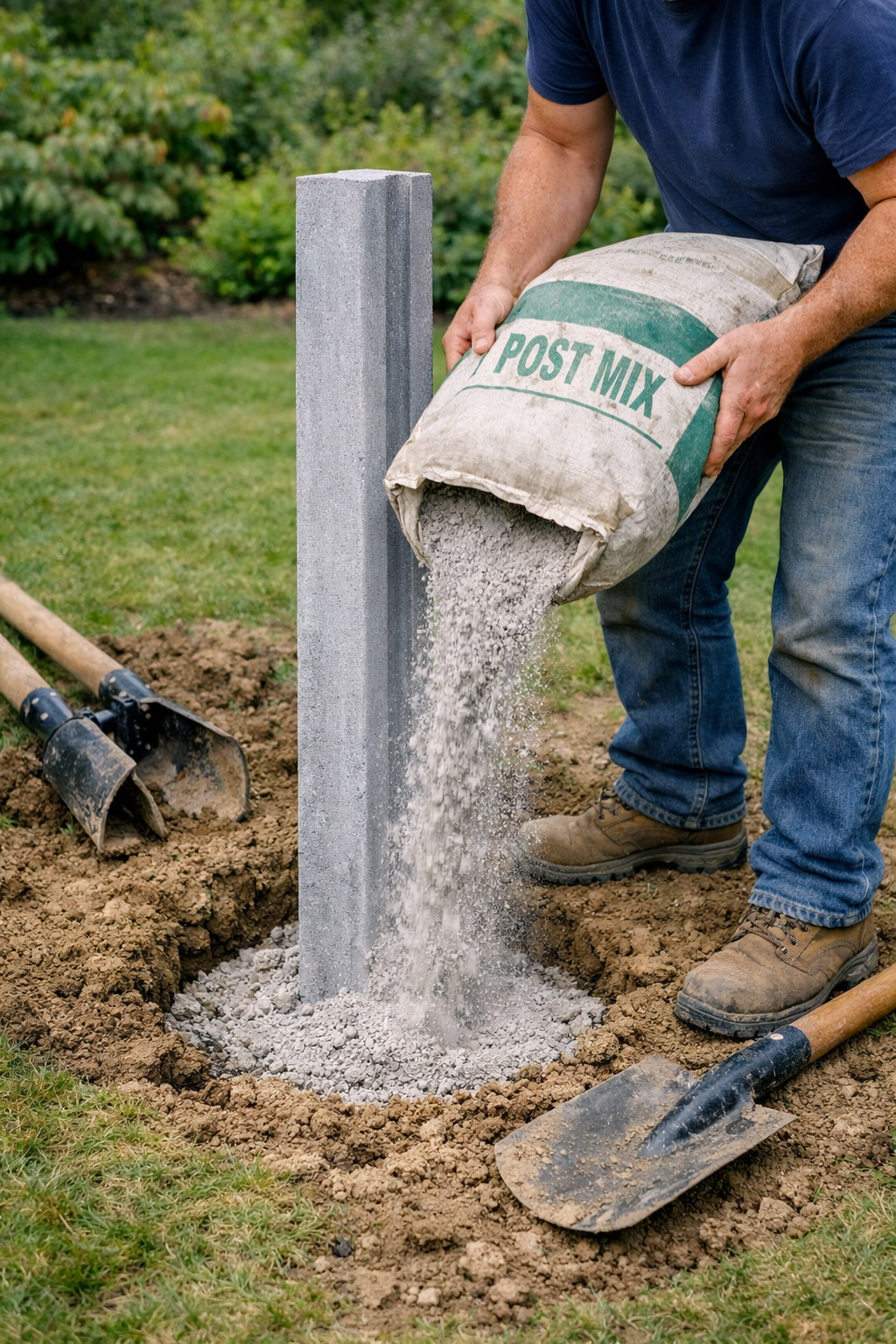
Even the best post will lean if it is not set properly. As a rule of thumb, bury roughly a third of the post length, so around 2ft for a 6ft fence, and more in loose or sandy ground. Back-fill with a strong postcrete mix or fresh concrete, and leave it to cure fully before hanging panels. In exposed spots near open fields, it pays to dig a little deeper and use a wider footing. Our guide on how deep concrete fence posts should be set covers the detail.
Gravel Boards Add Strength Against Wind and Damp
The bottom of a fence is where wind pressure and ground moisture meet. A concrete gravel board slotted between the posts keeps the panels off wet soil, adds rigidity along the base and stops wind from working underneath. Because it is also concrete, it will not rot or sag, so the whole run stays tight and square season after season.
Choosing the Right Post Height and Spacing
Standard panels need posts at regular spacing, and stretching the gap or choosing posts that are too short is a common cause of wind damage. Match your post length to your panel height and leave extra above and below ground for exposed sites. If you are unsure, our post spacing guide and the prices page will help you plan the right quantities.
What About Fence Panels in High Winds?
Concrete posts are only part of the picture. Heavy-duty concrete or timber panels slot into the grooves on the post, and a good fit matters: panels that rattle loosely in the slots give the wind something to work on. Make sure each panel sits fully home, and consider fixing the top with a simple retaining clip if your site is particularly open. Solid panels act as a windbreak, which is useful for gardens and livestock, but they also take the most load. On very exposed boundaries around Gainsborough and across the East Midlands, closer post spacing is a cheap way to add peace of mind.
Getting Ready Before the Storms Arrive
If an old timber fence is already leaning, the safest time to replace it is before the winter gales rather than after one. Swapping to concrete now means you can stop worrying every time a storm warning is issued. Whether you are fencing a garden, a paddock or a field boundary, concrete fence posts in high winds give you a boundary that stays upright when everything else is moving.
Want a fence that stands up to Lincolnshire weather?
Tell us your boundary length and how exposed the site is, and we will help you choose the right posts, gravel boards and quantities. We deliver across Lincolnshire, South Yorkshire and North Nottinghamshire, within around 100km of Gainsborough. Call or WhatsApp us on 07989 192742, or contact us here.
Get in Touch