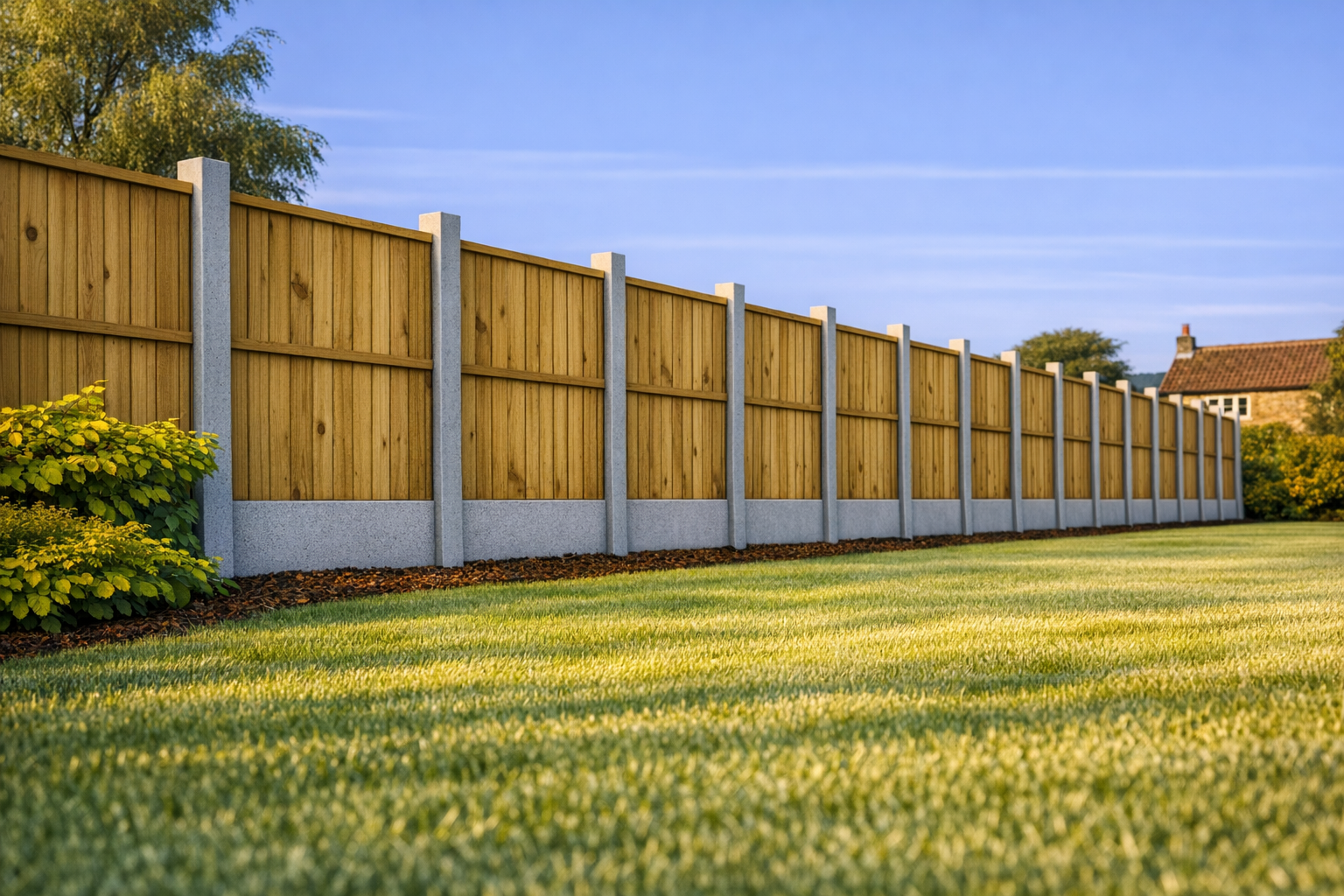
One of the biggest reasons customers near Gainsborough choose concrete over timber is how little maintenance a concrete fence actually needs. There is no annual staining, no re-treating, and nothing to rot. But "low maintenance" does not mean "no maintenance" at all. A few simple checks each year will keep your fence looking sharp and make sure small issues never turn into expensive ones. Here is exactly what a concrete fence maintenance routine should cover.
Why Concrete Fences Need So Little Upkeep
Steel-reinforced concrete fence posts will not rot, warp, twist or attract woodworm the way timber posts do, so they do not need the yearly treatment a wooden fence relies on to survive a Lincolnshire winter. That said, concrete is still exposed to the weather, and the damp, mild climate across the East Midlands is ideal for algae, moss and general grime to build up on any outdoor surface over time. Maintenance for a concrete fence is really about keeping that surface build-up under control and confirming nothing has shifted, rather than protecting the material itself.
Removing Algae, Moss and Green Staining
Green staining on concrete fence posts and panels is common wherever a fence sits in shade or gets less sun, and it is purely cosmetic rather than a sign of damage. A stiff outdoor brush with warm water and a general-purpose detergent will shift most light growth. For heavier moss or algae, a specialist patio and driveway cleaner, or a diluted bleach solution rinsed off thoroughly afterwards, works well. A pressure washer on a low setting is the quickest option for larger runs of fencing, just keep the nozzle a reasonable distance from the surface. Most customers find a clean once a year, usually in spring, is all a concrete fence near Gainsborough or further into Lincolnshire actually needs.
Checking Posts, Panels and Gravel Boards Are Still Secure
Once a year, walk the length of your fence and give each post a gentle push to check it has not become loose. Ground movement from heavy rain, frost, or nearby digging can occasionally work a post loose even though the concrete itself is unaffected. Check that gravel boards are still sitting correctly in their slots and have not been knocked out of place, and look along panel joints for any hairline cracks, which are more likely on an older fence that has taken a knock. Catching a loose post or a slipped gravel board early is a five-minute fix. Left for a season or two, it can lead to a cracked post that needs full replacement, which we cover in our guide on replacing a broken concrete fence post.
Dealing With Drainage and Standing Water
Standing water at the base of a fence is one of the few things that can genuinely shorten its life, particularly through repeated freeze-thaw cycles over a Lincolnshire winter. Keep the base of each post clear of leaves, soil build-up and grass cuttings so water can drain away rather than pooling against the concrete. If a section of your garden regularly waterlogs, a shallow layer of gravel along the fence line helps water disperse instead of sitting against the posts. This is also worth thinking about at installation stage, and it is one of the points we cover in our guide to concrete footings for fence posts.
When to Repair, and When to Replace
Surface staining, small chips, and even minor hairline cracks in the concrete coating do not usually affect a post's strength and can simply be left or tidied up cosmetically. A post that has snapped, is visibly leaning despite a firm footing, or has cracked all the way through is a different matter and should be replaced rather than patched, since its structural strength cannot be relied on. The good news is that with a slotted post system, a single damaged post or panel can usually be replaced on its own without disturbing the rest of the fence line.
A Simple Seasonal Maintenance Checklist
- Spring: Clean off winter algae, moss and grime; clear debris from the base of posts.
- Summer: Quick visual check for cracks or staining after any storms.
- Autumn: Clear fallen leaves that build up against posts and gravel boards before they trap moisture over winter.
- Winter: Check posts after hard frosts or heavy winds; a push-test takes seconds and catches problems early.
Followed consistently, this routine is genuinely all a concrete fence near Gainsborough, Lincolnshire needs to comfortably reach 30 years or more of service, which we go into in more detail in our guide on how long concrete fence posts last. It is a fraction of the time and cost that timber fencing demands over the same period. For current stock and sizing, our prices page has everything you need.
Spotted a loose post or damaged panel on your fence?
We supply replacement concrete fence posts, gravel boards and panels to match most standard sizes across Lincolnshire, South Yorkshire and North Nottinghamshire. Call or WhatsApp us on 07989 192742, or get in touch for a straight answer from a supplier near Gainsborough.
Get in Touch